
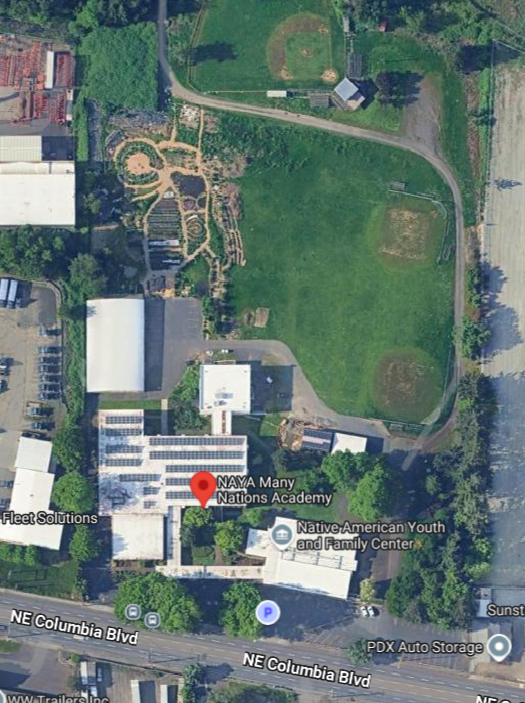
Earlier this week I volunteered with NAYA (Native American Youth and Family Center), a local organization that offers a wide variety of comprehensive services from childcare services to food and financial support to the Native American community in Portland. This organization serves as a community center for events, services, workshops, summer camps, etc. – I was there to support the community garden created behind the main building in 2020.
Until now, the term “community garden” would spark an image in my mind of individuals from the same neighborhood claiming a small space for their own personal gardening needs, maybe with some sharing involved.
But oh, it is so much more than that.
“Community” Gardens
While learning more about the racial discrimination throughout Portland’s history, I came upon a graduate thesis titled ‘White Space, Black Space: Community Gardens in Portland, Oregon1‘ written in 2018 by David Ross Billings Jr., a previous student at Portland State University.
Through David’s review of similar literature and interviews with Black gardeners in Portland, it seems community gardens are another example of spaces advertised for “everyone” but more often than not appeal exclusively to white people and are associated with gentrification2,3.
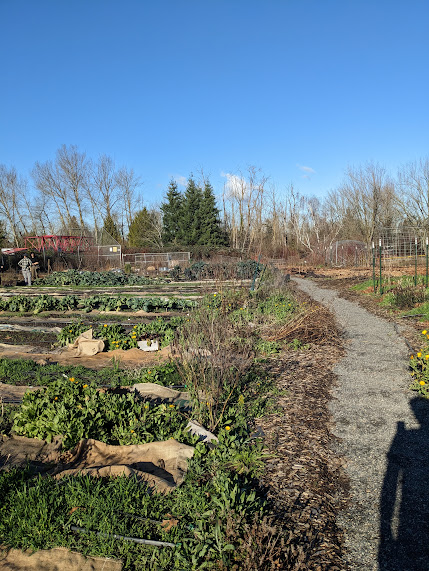
The NAYA Community Garden was established to provide what the Portland BIPOC community felt was missing. Community, tradition, giving, and pride are just a few of the values that can be found in the garden, which is split up into different sections by use – medicinal plants, vegetables (for boxed food deliveries and community u-pick days), PNW first foods, and even a children’s play area.
I am so grateful and excited to learn from others in this organization and support however I can. I also hope to take what I learn from NAYA and other volunteer opportunities to support diversity in future spaces I am involved in.
I am constantly looking to learn and grow – if I communicate something poorly, please reach out so I can correct myself. Thank you for reading.
Further Reading: