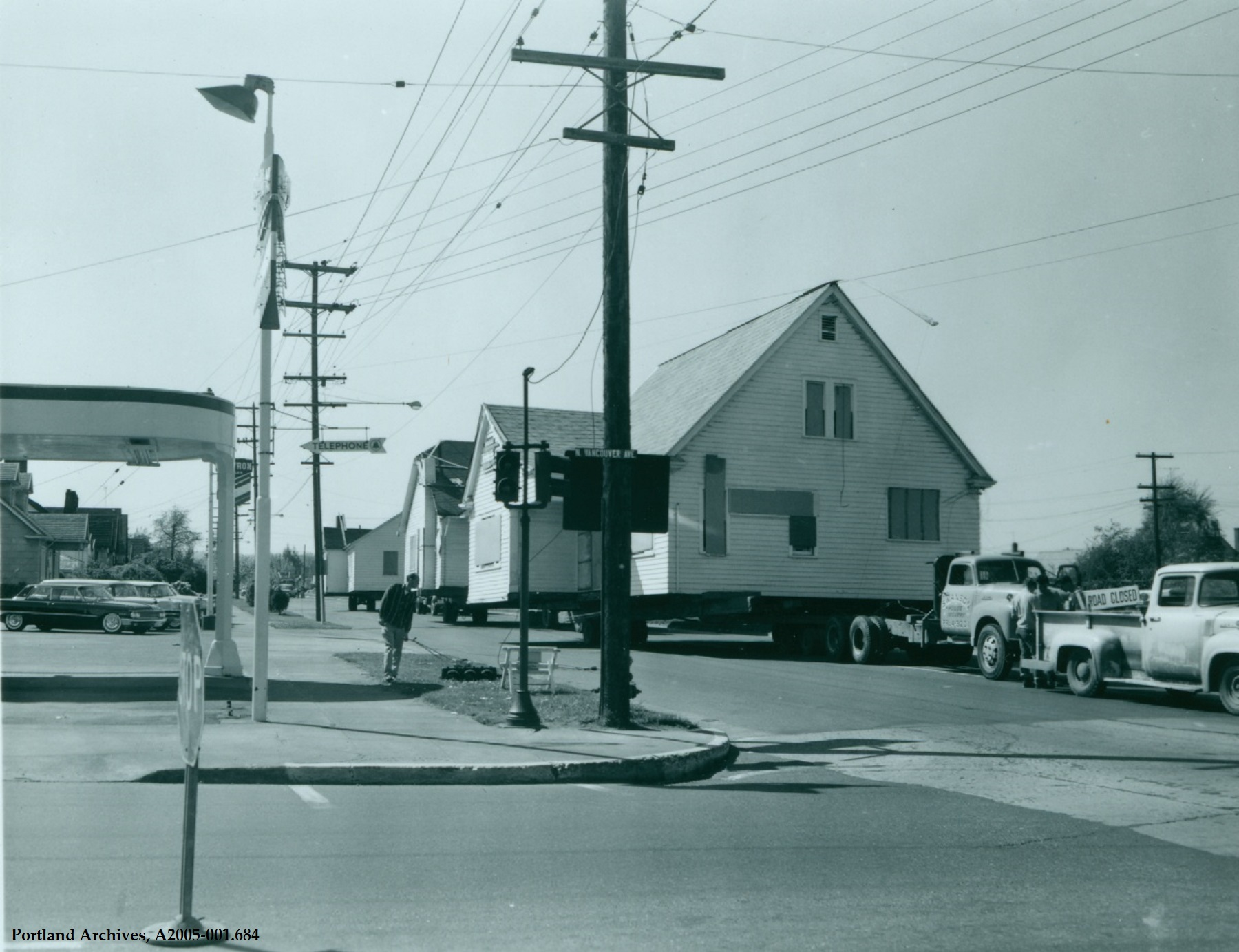

“In the 21st century, the gentrification of Portland’s eastside has continued to take a toll on Albina: The neighborhood that was once 68% percent black in 1990 was 28% in 2010.”1
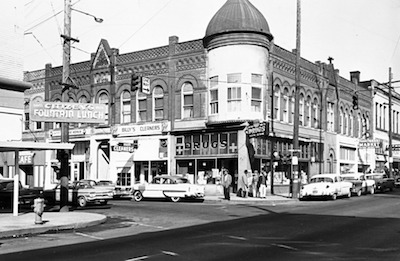
In July 2024, I moved to Portland from the East coast and have been renting a room on gentrified property in western Albina. The opportunities that have allowed me to live here are a product of my whiteness and the capitalist structures of our society today. Recognizing how and where I fit into the bigger picture of our world has been a frustrating, eye-opening experience as I work through these realizations, especially knowing I should have started these perspectives years ago.
Portland is a city with a terribly racist past in a state that also has a terribly racist history and origin. Walking into Portland for the first time, it doesn’t take long for someone to recognize it as the whitest metropolitan city in America.
The effects of Portland’s whiteness goes beyond what one sees just walking on the street. The lack of color is not for a lack of color within the population, but as a result of spaces once black now predominantly white due to intense gentrification, construction projects, redlining and other actions often summarized under the phrase “urban renewal” that have displaced black communities time and time again.
I live in the Boise neighborhood which takes place in the historic Albina district, an urban center that contained over 70% of Portland’s black population in the early 1950s. This area was more than just a neighborhood or district, it was a place where black citizens found community.
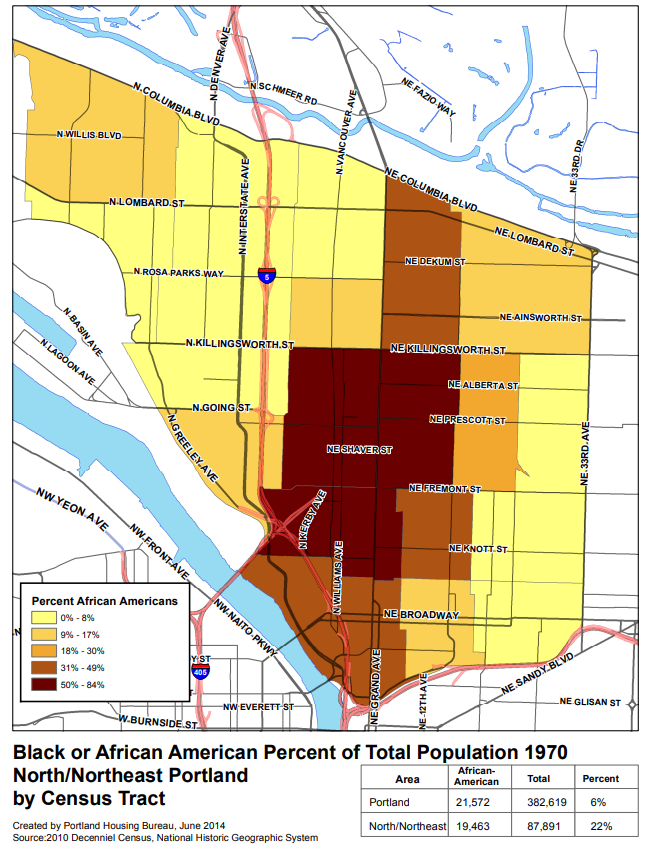
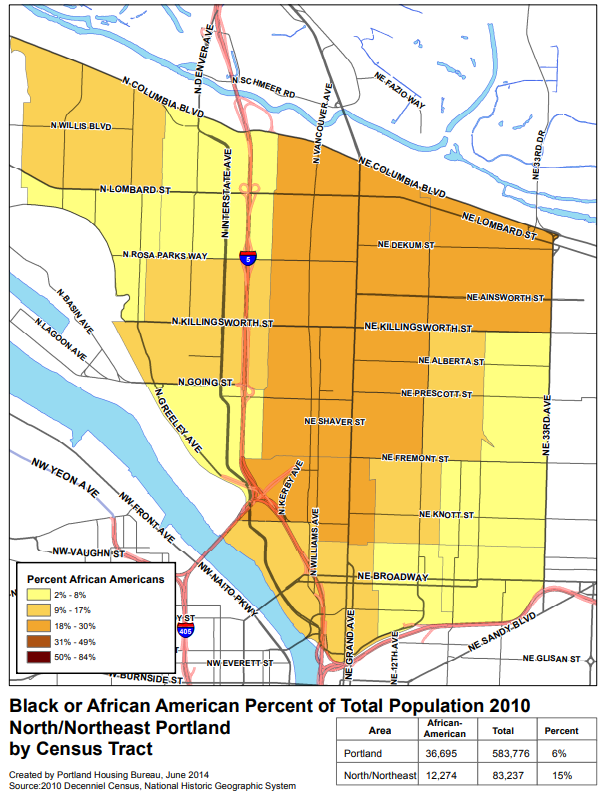
The following neighborhoods are part of the Albina district:
Portsmouth, Kenton, East Columbia, Sunderland, Arbor Lodge, Overlook, Piedmont, Humboldt, Boise, Eliot, Irvington, Sabin, King, Vernon, Woodlawn, Concordia
The cultural boom in this area through the mid-1900s was quickly met with further action by the City of Portland. In the late 1960s through the 1970s, the construction of Emmanuel Hospital (a project that would be discontinued for lack of funding) and the construction of the I-5 corridor would further displace black people from their homes. Through this all, the black community did not fail to have a voice.
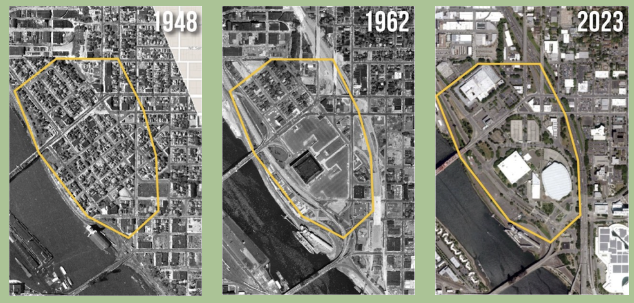
The Replacement Housing Agreement3, led by community members, was signed in 1971 by Emmanuel Hospital, the Housing Authority, the Portland Development Commission, the Model Cities Citizens’ Planning Board, and the City Demonstration Agency. This agreement promised to build replacement housing for those that were displaced through construction.
But these houses were never built.
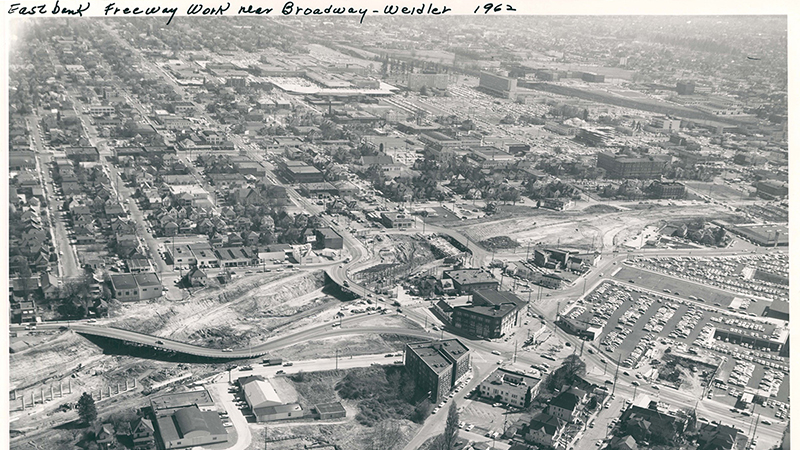
Since the 1900s, urban renewal projects around Portland (totaling 20 since they began in the 1950s) continued to change the racial distribution in Portland. The largest of these projects, the Interstate Corridor Urban Renewal Area (ICURA) contained sections of 10 neighborhoods and would lead to the further displacement of African Americans. These actions caused deep and lasting harm and forced Black residents to move farther north and northeast of the neighborhood4.